Vesmír - THE UNIVERSE / SPACE
Vydáno dne 14.09.2026
Jaký je rozdíl mezi slovíčky THE UNIVERSE a SPACE, která obě
překládáme jako ‘vesmír’?
Vesmír
Mezi slovíčka, která se českým studentům angličtiny často pletou,
patří i slova space
UNIVERSE
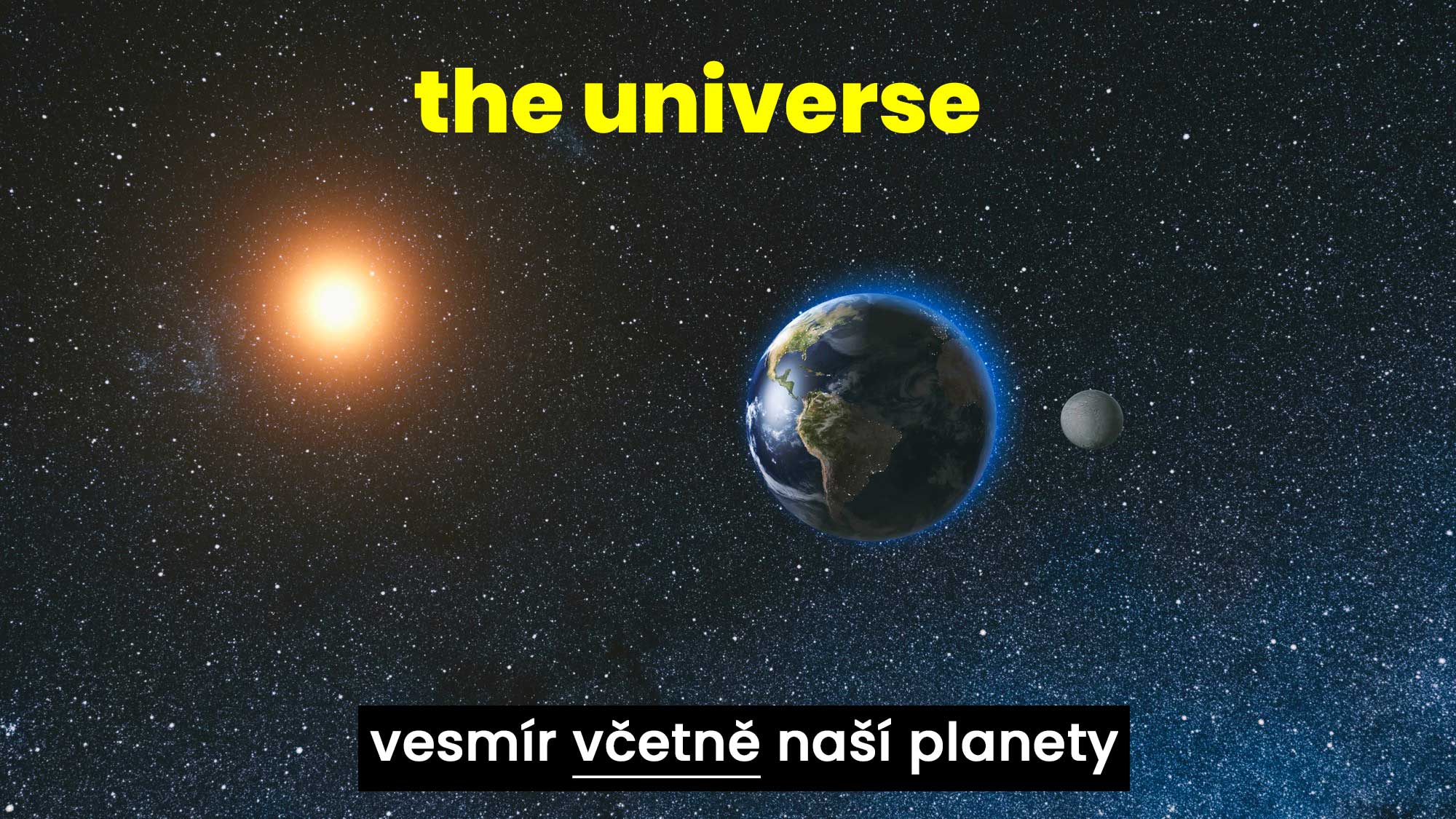
Slovíčko universe
Používá se převážně s určitým členem (the universe), podobně jako další unikátní podstatná jména (the world, the sun, the moon, the sky, the solar system, the north pole, the equator atd.)
Do you think we are alone in the universe?
Nobody really knows how the universe began.
There are believed to be about 100 billion galaxies in the universe.
The spaceship traveled through a wormhole to another part of the universe.
The website contains 3D maps of the known universe.
SPACE
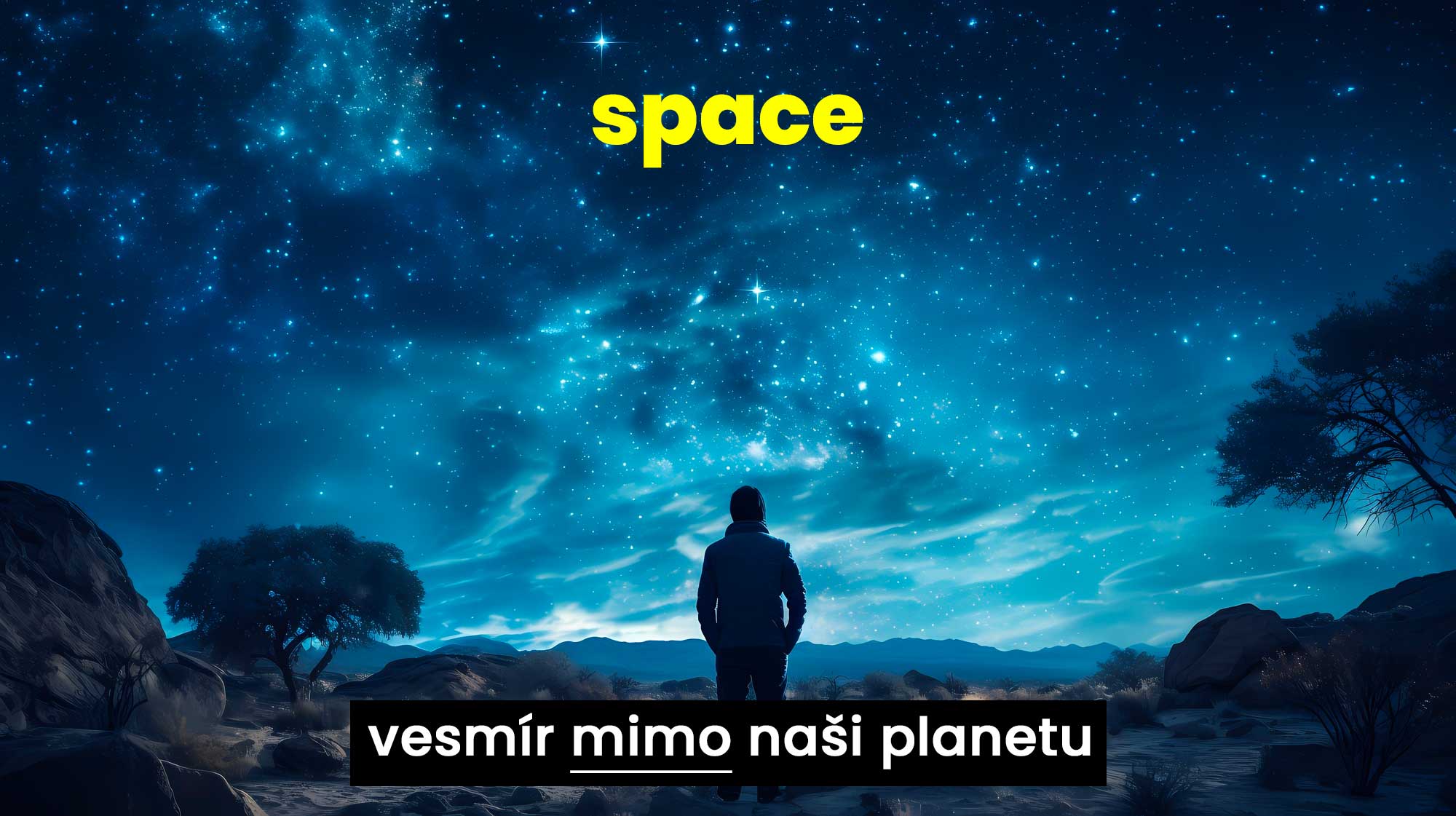
Potom je tu ale také slovíčko space
Toto slovíčko tedy použijeme např. pro lety do vesmíru, zkoumání vesmíru, bytosti z vesmíru apod. Používá se zásadně bez členu (podobně jako např. nature – příroda, či time – čas).
Yuri Gagarin was the first man in space.
I hope I'll be able to travel through space one day.
I believe people should continue to explore space.
Vesmíru se také někdy říká outer space
So far people have received no intelligent signals from outer space.
Velmi často se se slovem space
Astronauts at the International Space Station were out on a spacewalk to repair the damage.
The scientist explained why it is important to invest in space research.
Space shuttles were designed and used to carry astronauts and cargo into space.
Závěrem
Nepleťte si tedy vesmír – universe
Who was the first man in the universe? – Gagarin byl první v kosmu ale nebyl prvním mužem v celém vesmíru.
Is there life in the universe? – Zcela jistě, jsme tu přece my.
One day we will travel to the universe. – Tam přece nemusíme cestovat, tam jsme.
- Myslíš, že jsme ve vesmíru sami?
- Nikdo skutečně neví, jak vznikl vesmír.
- Předpokládá se, že ve vesmíru je asi 100 miliard galaxií.
- Kosmická loď proletěla červí dírou do jiné části vesmíru.
- Ty stránky obsahují trojrozměrné mapy známého vesmíru.
- Jurij Gagarin byl prvním člověkem ve vesmíru.
- Doufám, že jednou budu moci cestovat vesmírem.
- Věřím, že by lidé měli pokračovat v průzkumu vesmíru.
- Lidé doposud nepřijali z vesmíru žádné inteligentní signály.
- Astronauti na mezinárodní vesmírné stanici vyšli ven, aby opravili poškození.
- Vědec vysvětlil, proč je důležité investovat do vesmírného výzkumu.
- Raketoplány byly navrženy a používány k dopravě astronautů a nákladů do kosmu.