Slovíčko PAR
Vydáno dne 07.09.2026
Slovo PAR možná znáte z golfu, ale víte, že se v angličtině
používá i jinak? Řekneme si něco o UP TO PAR, SUBPAR, ON PAR
WITH apod.
Anglické slovíčko PAR
Slovo par
He finished the round two under par.
He made par on the final hole.
I was five over par at the end of the round.
The course has a par of 72.
Z tohoto významu se vyvinulo obecnější použití, kdy par označuje určitou očekávanou, běžnou či požadovanou úroveň nebo standard. Často se s ním setkáte v ustálených spojeních. Ta jsou typická spíše pro neutrální až formálnější angličtinu.
(NOT BE) UP TO PAR

Nejdůležitější je spojení be up to par
Velmi často se používá právě tehdy, když něco požadované úrovně nedosahuje, proto se s ním běžně setkáte v záporných větách.
The food wasn't quite up to par, although the service was excellent.
The hotel room wasn't up to par, so the manager offered us a partial refund.
If your work isn't up to par, you'll probably be asked to make some changes.
Najdeme ho ale i v kladných větách.
Everything seems to be up to par.
We need to make sure the equipment is up to par.
Nejčastěji tedy uvidíte (not) be up to par. Vedle toho máme i bring sth up to par nebo get sth up to par, tedy dostat něco na požadovanou úroveň, do odpovídajícího stavu.
It took him a few weeks to get his English up to par.
The hotel needs a lot of work to bring the rooms up to par.
BELOW PAR
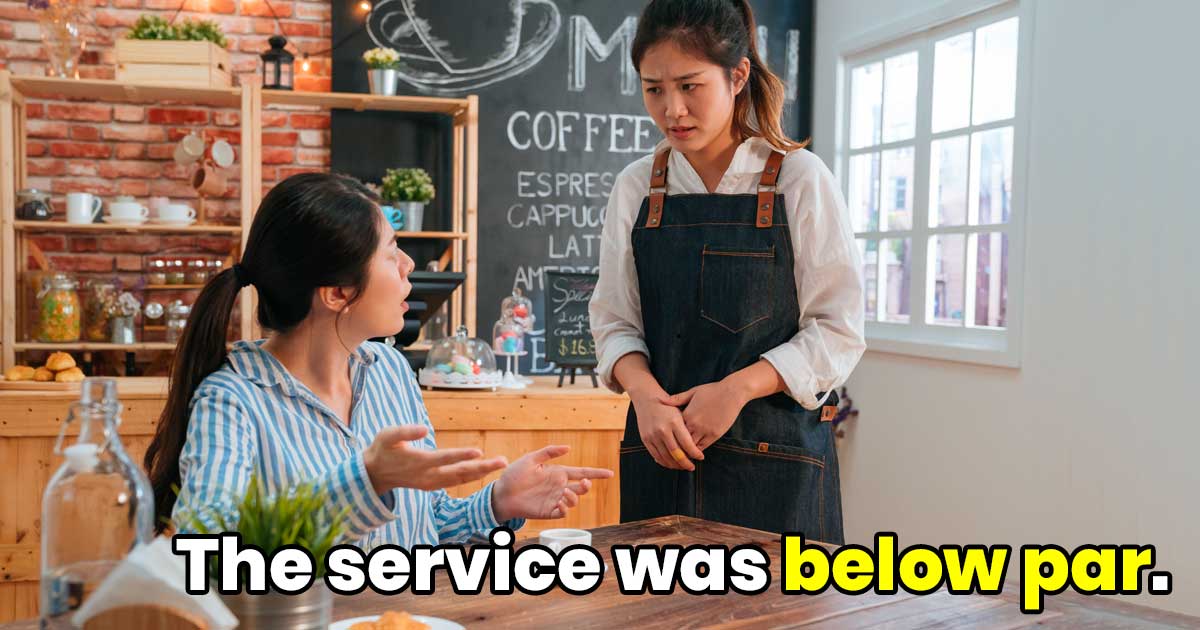
Opakem může být spojení below par
The service was well below par.
His work has been below par lately.
The quality is below par for a hotel in this price range.
Slyšet můžete ve stejném významu taky under par
The food was slightly under par compared with our previous visit.
Her performance was under par, especially in the second half of the match.
Především v britské angličtině se používá taky spojení feel below par nebo feel under par, které znamená necítit se ve své kůži, necítit se úplně dobře.
I'm feeling a bit under par today, so I think I'll stay home.
She's been feeling below par for a few days.
Pozn.: Pozor na golf, kde below par naopak znamená dobrý výsledek. Čím méně úderů hráč potřebuje, tím lépe. V běžném přeneseném významu je však negativní.
SUBPAR

Velmi podobný význam má přídavné jméno subpar
The food was subpar, especially considering how expensive the restaurant was.
We complained to the manager about the subpar service we received.
The hotel received several negative reviews because of its subpar facilities.
The picture quality is surprisingly subpar for such an expensive television.
If the quality remains subpar, customers will eventually start looking elsewhere.
Pozn.: Předpona sub- znamená pod, níže než, takže subpar je doslova něco, co je pod požadovaným standardem. Více o předponách v článku Prefixes (anglické předpony).
Výše zmíněné výrazy tedy lze použít ve stejném kontextu. Rozdíl je především gramatický:
The service wasn't up to
par.
The service was below par.
The service was under par.
The service was subpar.
Všechny čtyři věty mohou v daném kontextu znamenat přibližně Obsluha nebyla na úrovni.
ABOVE PAR
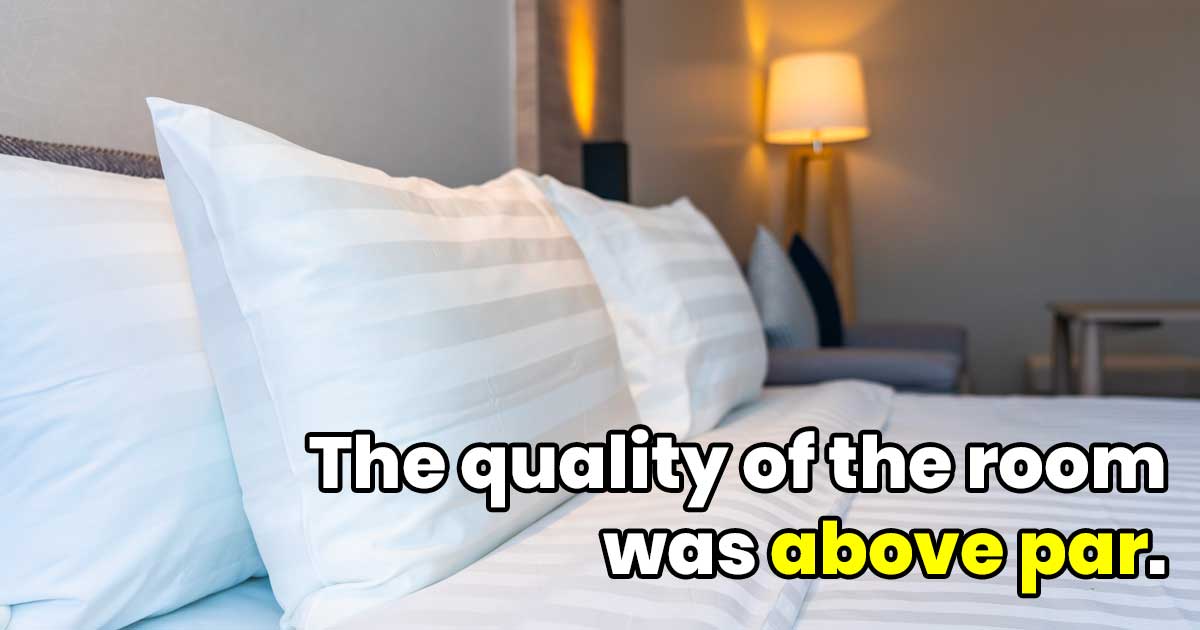
Logicky existuje také above
par
The quality of the rooms was above par.
Her performance was above par, especially considering how little time she had to prepare.
Overall, the standard of accommodation was above par for such a small hotel.
V běžné angličtině se však s above par setkáte méně často než s below par.
ON (A) PAR WITH

Dalším užitečným spojením je on a par with
Their latest album is on a par with their best work.
His English is now on a par with that of his classmates.
The restaurant is on a par with some of the best in the city.
Her performance was on a par with that of the other players.
His performance is on a par with the top players.
Zde tedy par nevyjadřuje ani dobrou, ani špatnou kvalitu. Pouze říká, že dvě věci jsou na srovnatelné úrovni.
Zejména v americké angličtině je běžná také varianta bez členu,
tedy on par
with
Her English is now on par with that of her classmates.
This year's sales are roughly on par with last year's figures.
PAR FOR THE COURSE

Začali jsme zmínkou o golfu a tím také článek zakončíme. V golfu
totiž spojení par for the
course
Přeneseně se však toto spojení používá ve významu normální, běžný, obvyklý, očekávatelný, patřící k věci, nejčastěji v souvislosti s něčím nepříjemným či nežádoucím. Něco ve stylu “to už k tomu patří”, “je to normální, co jiného byste čekali…”.
Long delays are par for the course at this airport.
Working late is par for the course in this industry.
A few technical problems are par for the course with a project this complicated.
He didn't even apologize, but that's par for the course with him.
- Kolo dohrál dvě rány pod par.
- Na poslední jamce zahrál par.
- Na konci kola jsem byl pět ran nad par.
- Hřiště má celkový par 72.
- Jídlo nebylo moc na úrovni, přestože obsluha byla vynikající.
- Hotelový pokoj nebyl na požadované úrovni, tak nám manažer nabídl částečné vrácení peněz.
- Pokud vaše práce nebude na požadované úrovni, pravděpodobně budete požádáni o nějaké úpravy.
- Všechno se zdá být na požadované úrovni.
- Musíme se ujistit, že vybavení odpovídá požadovanému standardu.
- Trvalo mu několik týdnů, než dostal svou angličtinu na potřebnou úroveň.
- Hotel potřebuje spoustu úprav, aby se pokoje dostaly na požadovanou úroveň.
- Obsluha byla hluboko pod očekávanou úrovní.
- Jeho práce je v poslední době podprůměrná.
- Na hotel v této cenové kategorii je kvalita podprůměrná.
- Jídlo bylo ve srovnání s naší předchozí návštěvou trochu pod obvyklou úrovní.
- Její výkon byl podprůměrný, zejména ve druhé polovině zápasu.
- Dnes se necítím úplně dobře, takže asi zůstanu doma.
- Už několik dní se necítí úplně dobře.
- Jídlo bylo podprůměrné, zvlášť vzhledem k tomu, jak drahá ta restaurace byla.
- Stěžovali jsme si manažerovi na nevyhovující služby, kterých se nám dostalo.
- Hotel dostal několik negativních recenzí kvůli nevyhovujícímu vybavení.
- Kvalita obrazu je na tak drahou televizi překvapivě špatná.
- Pokud zůstane kvalita podprůměrná, zákazníci se nakonec začnou poohlížet jinde.
- Kvalita pokojů byla nadprůměrná.
- Její výkon byl nadprůměrný, zvlášť vzhledem k tomu, jak málo času měla na přípravu.
- Celkově byla úroveň ubytování na tak malý hotel nadprůměrná.
- Jejich nejnovější album je na stejné úrovni jako jejich nejlepší tvorba.
- Jeho angličtina je nyní na stejné úrovni jako angličtina jeho spolužáků.
- Tato restaurace je srovnatelná s některými z nejlepších restaurací ve městě.
- Její výkon byl srovnatelný s výkonem ostatních hráčů.
- Jeho výkon je na úrovni nejlepších hráčů.
- Její angličtina je nyní na stejné úrovni jako angličtina jejích spolužáků.
- Letošní prodeje jsou přibližně na stejné úrovni jako loňské.
- Dlouhá zpoždění jsou na tomto letišti běžná.
- Pracovat dlouho do večera je v tomto oboru běžné.
- Pár technických problémů se u tak složitého projektu dá očekávat.
- Ani se neomluvil, ale to je u něj typické.