



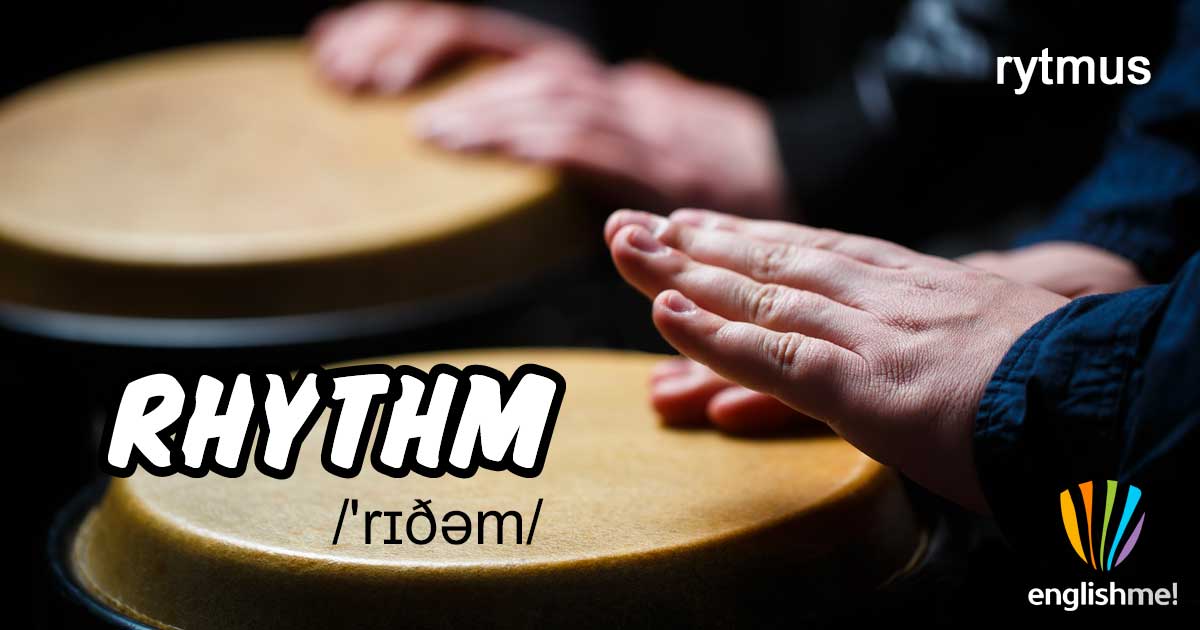
U podstatného jména rhythm
The song has an upbeat rhythm that makes you want to dance.
Finally the rhythm of her breathing slowed.
Everyone clapped to the rhythm of the music.
When I dance, I usually just sway to the rhythm.
An arrhythmia is an uneven heart rhythm.
Some people have no sense of rhythm. (zde je nepočitatelné)
It's absurd how many musicians can't play in rhythm. (opět nepočitatelné)
Rytmu v hudbě se říká také beat
The audience stomped and clapped to the beat of the song. (= rhythm)
Přídavné jméno rytmický lze vytvořit pomocí koncovky
-ic,
tedy rhythmic
In poetry, words are usually arranged in a rhythmic pattern.
I closed my eyes and listened to the rhythmic pounding of the train wheels on the tracks.
I was worried when I noticed her heartbeat wasn't rhythmical.
The driver's fingers tapped rhythmically against the steering wheel.
Do you play any instruments? No, I'm tone-deaf and rhythmically challenged.
- Ta píseň má radostný rytmus, díky kterému se chce člověku tančit.
- Nakonec se rytmus jejího dechu zpomalil.
- Všichni tleskali do rytmu té hudby.
- Když tancuju, tak se obvykle jen houpu do rytmu.
- Arytmie je nepravidelný srdeční rytmus.
- Někteří lidé nemají žádný smysl pro rytmus.
- Je absurdní, kolik muzikantů neumí hrát v rytmu.
- Publikum dupalo a tleskalo do rytmu té písně.
- V poezii jsou slova obvykle uspořádaná v rytmickém vzoru.
- Zavřel jsem oči a poslouchal rytmický tlukot kol vlaku na kolejích.
- Měl jsem obavy, když jsem si všiml, že tlukot jejího srdce není rytmický.
- Prsty řidiče ťukaly rytmicky do volantu.
- Hraješ na nějaké nástroje? – Ne, nemám hudební sluch a nemám smysl pro rytmus.